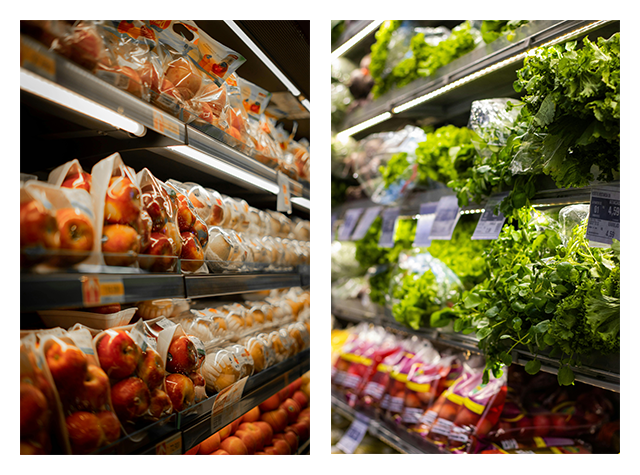
In the food industry, products typically move through multiple stages including production, warehousing, transportation, cold chain logistics, and retail distribution, placing higher demands on inventory turnover efficiency, product traceability, and environmental monitoring.At the same time, inventory rotation management within food supply chains has become increasingly complex, especially in fresh food, cold chain, and perishable product scenarios where short shelf lives require faster inventory movement and more timely condition monitoring.Failure to manage inventory turnover and product status in time can easily result in food loss and waste. Industry data shows that approximately 1.3 billion tons of food are wasted globally each year, with a significant portion of the loss occurring during warehousing, transportation, and retail distribution processes.
In addition, traditional manual recording and barcode scanning methods are becoming increasingly unable to meet the food industry's demands for real-time inventory updates and end-to-end traceability. Temperature fluctuations, humidity changes, delayed inventory rotation, and inaccurate cargo location records can all lead to product quality risks, inventory loss, and reduced supply chain operational efficiency. At the same time, liquid packaging, metallic packaging, and humid cold chain environments further increase the complexity of RFID deployment in food industry applications, placing higher demands on tag read stability and environmental adaptability.
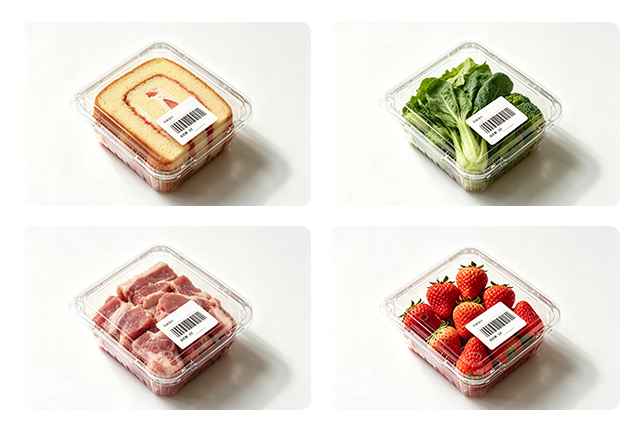
The application of RFID in the food industry is expanding beyond traditional inventory management into areas such as cold chain monitoring, shelf-life tracking, and supply chain traceability. Because food products often move rapidly between production, warehousing, transportation, cold chain logistics, and retail environments, real-time synchronization of inventory status, product location, and environmental data has become increasingly important, making automated data capture a key part of food supply chain digitalization.
In fresh food, cold chain, and perishable product scenarios, RFID can work together with temperature sensors, environmental monitoring systems, and digital supply chain platforms to continuously track product conditions throughout transportation and warehousing processes. This allows businesses to identify temperature anomalies, inventory buildup, or logistics delays more quickly. At the same time, RFID can support more flexible inventory rotation and replenishment strategies, helping reduce food waste while improving supply chain coordination efficiency and inventory visibility.

Telephone | (86) 0592-3194688
China | No. 2-16, Hongxi South Road, Xiang'an District, Xiamen City, Fujian Province
Malaysia | Lot 28, Jalan Permata 1/1, Arab-Malaysian Industrial Park, 71800 Nilai, Negeri Sembilan, Malaysia.


-


-

market@xindecoiot.com
-
